
 |
 |
 |
 |
 |
 |
 |
 |
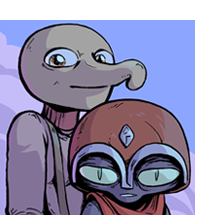
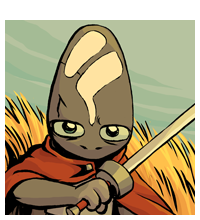
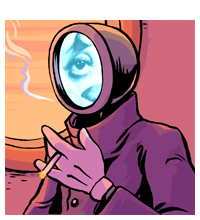
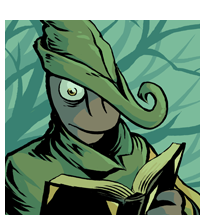
Rice Boy 20th AnniversaryRB20.1: THE MUD (an excerpt from the Surrealist Manifesto) A conscious ordering of the human world had after all recently led to the most destructive war so far in history— a rationalized, industrialized global machine of death and imperial reshuffling. It made sense to divest from the strictures of order, propriety, logic, if that was what they would yield. It made sense to present an aesthetic expression of that divestment— to make the CASE for it in terms so weird and totalizing that it effectively broke the logic of all of the history of visual culture up to that point—while at the same time tying together various other orphaned threads from centuries earlier into one grand psychic anti-project. Surrealism was axiomatically concerned with accessing the unconstrained subconscious mind, with BREAKING FREE— but at the same time it is essentially reliant on new pointedly Conscious, Systematic images of the human mind and of thought… The world was no longer the narrativized, symbolic network of the Alchemists and Astrologers that the Surrealists identified as their antecedents… Now it was kind of a rational, objective thing. And we were individual things IN it, which were ourselves able to be examined as OBJECTS in new ways… This opens up a new way of thinking about interiority, about “the imagination,” “the artist,” the individual, which make Surrealism possible... or, which make it possible to really articulate it, and to see it in retrospect. I got interested in the Surrealists around when I was starting college basically because it did feel like a miracle to me that images and ideas could just emerge out of the subconscious. I saw no one else who seemed as STRUCK by that— the images, if you were intentional or you got lucky, could be really extremely strange, and specific, and clearly-articulated. I have a kind of sense of a constant STREAM of them, being rendered in endless opaque profusion in some unobserved part of my brain, and sometimes very rarely I can have the part of me that “pays attention” actually pay attention to them. Aiming my conscious self at them like an enormous unwieldy telescope. Or microscope. As I was at this moment in early adulthood a little bit hardening into a pretty uptight, materialist-atheistic sort of person, all this stuff having to do with interiority and experience still felt like the last big thing I couldn’t square. I understand broadly the material basis for there being a world, and there being people in it, and them looking and working the way that they do. But I don’t understand why I’m IN THERE, looking out. Why is there a point of view in here? Why am I not a philosophical zombie? Anyway that felt like the one magic thing. And the fact that there was all this subconscious STUFF going on in my head, that I could pay attention to if I worked at it, felt like a sort of visual expression of that impossibility. Like your brain is taunting you: saying how arrogant you are to think you’re in command of all of this, to think you’re something uniquely separate from material reality, your little imagined dimensionless point of self, your immortal Soul, etc. No, you’re in the mud with the rest of everything that’s ever existed, and the mud is IN you, and it’s in your brain, and the mud is a ceaseless stream of strange pictures until you die. So that’s Surrealism, to me. Why was this so exciting to me? At no point have I ever really seen myself as being a part of any movement contiguous with the European Surrealists. But I was excited or relieved to see some articulation of the occult VALUE of this sort of weird automatic imagery, some expression in parallel with my own excitement about it. There was a MYSTICAL aspect or a RELIGIOUS aspect to how they talked about this, and implicit in their prioritization of images that exist outside of conscious attention. If you acknowledge there’s something worth recording there, then you are acknowledging a world in and out of yourself that’s BIGGER than what you can understand? I like that. The main thing, though, was that it was starting to feel to me like there was a much bigger and weirder imaginal SPACE out there–in here– than what was presented to me in the visual culture that surrounded me. And realizing that, or trying to move always in the direction of realizing that, has been one of the major engines of everything I have made for the past 20 years. RB20.2: RICE BOY A lot of what Rice Boy was, at the start, was just a receptacle for a bunch of this automatic imagery I was coming up with. I was really obsessed with the feedback loop you could get into with picturing things and doodling them… Like when you can draw unselfconsciously enough the drawing becomes an externalized part of your image-making brain… I had these hypnagogic images sometimes that had that sort of almost-perfect clarity, and then doing explanatory drawings attempting to nail them down would show me how unclear they really WERE, and then the drawing itself would become the clear thing to hold onto and build, while checking it against the fading image of the hypnagogic thing. I remember T-O-E showed up like this… and Gerund I think… and Pons and Oire and the Trills and Golgo… There is something superstitious or like parodically religious about holding to these images, kind of. Like you’re treating it essentially as an ecstatic VISION, but it’s just a little cartoon guy to put in your internet comic. And the ridiculousness of taking it so seriously kind of makes you want to take it MORE seriously. In the years since Rice Boy I have basically maintained this same attitude: the character of Vattu was basically a fully-formed automatic image, as was Sola the protagonist of Island Book, as were Spondule and Navichet, the characters around whom I’ve built 3rd Voice, the most ambitious thing I will ever make in my life. Rice Boy himself was a little doodled character I had been drawing in various little ways since high school. I had made some loose little minicomics with him and had a feel for him as a kind of lonely, insecure figure… there are ways I think he provided a way to talk through certain emotional and interpersonal issues… There is obviously not very much going on with this character design. Something that cartoonists understand— or at least have a handy parable of— is how readily people anthropomorphize a thing that is really not a person. A lot of what the comic Rice Boy was, in retrospect, was playing with this: how much can a character be understood and related to, if it’s made as graphically-limited as possible? How much do I need in order to be able to communicate with it, and how much does the reader need to receive it as I intend? Does the character still work in a more visually-developed context? Does that make it more or less believable? What about a character that’s more overtly an inanimate object: it’s easy to anthropomorphize a robot, obviously. But what if I remove even more of my tools, and he has no FACE, even? Turns out, a person is willing to meet you halfway— EAGER to do so. The main thing we DO is assume agency, humanity, relatability in the things around us. SO a lot of what cartooning IS is to extrapolate from this, build upon this. Not to treat it as a TRICK, but to take that eagerness as a shared base level that you can build upon productively. ANYWAY, I came into Rice Boy with this sense of the character as an incongruously simple creature in a big elaborate fantasy setting, and with these accumulated hypnagogic images, and with some little media fascinations I had at the time: the texture of Ralph Bakshi’s work was beautiful to me, to the extent that I wanted to make my own improvised, collaged animated movie and felt for a while like I was compromising by making a comic book instead. The Sergio Leone Clint Eastwood Westerns were an absolute obsession of mine for that couple of years, in ways that might not be visible. The hypnotic psychedelic material of some of the 1930s Fleischer cartoons was hitting me extremely hard around 2006, too: this was, in a way, a popcultural expression of the surrealist movement that had just articulated itself a few years earlier. Also there was LOTR, which I hadn’t yet read, but the movies left an enormous footprint in my and the world’s conception of what fantasy fiction was. The sort of monomythic, LOTR-starwars thing provided a structure for me to put all of this stuff in , basically. I love a QUEST narrative; I love a sense of structure that feels grand, apocalyptic— that feels like it invests the entire world around it in itself. I really ended up using this kind of story as a template, so I didn’t have to think too much about what to do with a big story. Guardrails. As I read it now, I can see parts where I’m kind of “doing the voice” disingenuously of this monomythic sort of story... I just read through Rice Boy for the first time in certainly over 10 years. There is a lot I don’t like about it, a lot that is really messy and poorly-thought-through. A lot of things that feel like they could easily have been worked-at or thought about a little harder. I really could draw all of this stuff a whole lot better now! I certainly could’ve drawn it a lot better then if I’d allowed myself more room to. I could write it with more intention, I could build up the sense of scale and gravity of it as I thought I was doing way better… Oh well though, I mean I can’t look backwards too hard. It exists as it exists because it happened when it did. Rice Boy was the first thing I made that felt like a fluent and personal sort of statement. There are aspects of it where I really see what I was going for… there are bits that are more clever or charming or weird than I remembered… The formal looseness, the bad or lazy drawing, is a persistent problem. BUT I am pleased with how it holds together and maintains legibility. I really just want people to know that I made it 20 years ago, if they encounter it now. Really vertiginous to read it now. I see in it a first iteration of my pattern of long-format story-making, like the building of a house I have basically continued to psychically live in. Setting up big structures to play around in, dropping foreshadowing and hoping you can make it connect… Building up consequential moments tens or hundreds of pages in advance, and then executing on them with the most showoffy presentation my technical ability of the moment allows for. RB20.3: THE WOOL When I read through Rice Boy now, it feels like there’s a constant profusion of revelation and prophecy, so much that it builds a sense of flimsiness or irony— it calls into question the IDEA of revelation in ways I kind of had forgotten. Like the mechanism of all this prophecy and these passages into more and more REAL reality just amounts to a disorienting jumble. What IS real, if we strip away the nature of the world so much and so ridiculously. What is going on underneath? There is built into Surrealism this idea of “removing the wool from one’s eyes,” right? We’re looking at what’s REALLY going on in the mind, experientially! We’re stripping from ourselves the contingent shackles of culture, ideology, etiquette, to get at the raw real STUFF. In thinking about 2006, and living in the world since then, I am preoccupied with frameworks or logics that do this sort of thing: that purport to show you how things REALLY ARE. Journalism feels like a signal example… Journalism operates on a sort of premise of OBJECTIVITY, but can you believe in an objective newsmedia after the consent-building for the Iraq war? Or if you hadn’t lost faith in it then, you probably lost faith in it in the first Trump administration, or Israel’s genocide of the past two years, or in the second Trump administration. What is the theoretical OBJECTIVE perspective, here? What journalistic institution could say anything disinterestedly? In the area of PROPHECY AND REVELATION, maybe let’s look at what was happening to American Christianity around the mid-00s. There is an interfacing of premodern scripture with a very modern idea of journalistic objectivity that yields grotesque, ahistorical ideas like new-earth creationism and geopolitical projects to bring about the supposed literal material of the book of revelation. These are ascendant cultural forces in the W-bush administration, and in the general American milieu after 9/11! These are ways that people think they’re seeing a more real reality! You can see that there’s a place for new atheism— new models of atheism that are tailor-made to argue with the most easy-to-argue-with permutation of Christianity so far invented. This was an enormous phenomenon on the internet in the mid-00s. This atheism ALSO purports to show the world as it really is, free of the conspicuous and antisocial mythologies deforming much of the culture… But as time goes on it becomes quickly clear that the self-assured public intellectuals of the new atheist movement haven’t escaped ideology EITHER— look how uniformly they turn towards a chauvinistic war-of-civilizations image of the world, how fluidly and predictably they turn their supposed objectivity in directions Islamophobic, misogynistic, transphobic, as befits the culture-war needs of the moment. I think a similar thing can be seen in certain vulgarized threads descendant from the early Surrealists: maybe we can call this psychedelic culture, psychedelic ‘thought.’ I was really into Terence McKenna for a while around the mid-00s. It becomes clear that this sort of pseudomystical transcendent-reality-seeking thing does less to reveal TRUTHS to people than it does to eliminate their defense mechanisms against conspiratorial or superstitious or basically reactionary thinking. It all leans inexorably in the direction of Joe Rogan Experience ‘just asking questions’ culture-warfighting! There is some sort of line you can draw from Terence McKenna to Elon Musk. Salvador Dali to rightwing edgelordism. Richard Dawkins, Laurence Krauss, etc to Jeffrey Epstein. What does it mean to think you’ve solved the problem of ideology, in the united states in the 21st century? I guess it just means you’re surrendering your grasp on your own convictions, and allowing yourself to be sucked into the nearest center of gravity. And look at what the fuck that is. You don’t HAVE access to what’s real; you’re a person living in society with the rest of us. I guess religious people often put God there, at the one spot of total objective truth. God has solved the problem of ideology— he alone has access to the real reality, the real answers! Any human perspective is compromised, half-true, but not God’s! Crucially, though, for that to work, we do not know the mind of god! We can only sort of use him rhetorically: somewhere out there truth or objectivity is POSSIBLE, but we can’t get to it. And thank god SOMEBODY has the answers; can you even imagine living in a world with NO ANSWERS? When I look at the epistemological carnage being wrought by Generative AI for past few years, I think about this. I think a lot of people basically interact with these text-based systems as if they have some transcendent access to what’s true. Why would they believe this? Are they just that gullible, when faced by something that “communicates” in a way that’s easy to anthropomorphize? Why, also, do they seem so DESPERATE to believe this? Like people were just WAITING for something to slot into that space of “objective authority” for themselves? I know this really should be a "dont-hate-the-player-hate-the-game" situation, but it disgusts me. It disgusts me that anyone would debase themselves to rely on one of these things. Or, at this point, to interact with them in any way, at all. What made me start thinking about this was some of the talk around HALLUCINATIONS. (This is obviously a different usage of the word than the one we might use in talking about surrealism). As you probably know, “hallucinations” are what they’re calling the times when a LLM says or does something “incorrect.” The nature of the incorrectness is sometimes extremely weird, as these systems are functionally black boxes building their own internal semantic networks or whatever. But the whole thing is just GUESSING what the most likely next word is gonna be, right? So the mechanism by which HALLUCINATIONS emerge is identical to the mechanism by which “correct responses” emerge. How do you imagine solving the “hallucination problem,” then? Do you expect the chatbot to check every answer against “reality” before it responds? Where is this exhaustive and “objectively correct” model of reality you imagine it checking against? Do you want it to ask God? RB20.4: THE THREADS There is a comparison that I’ve seen made a lot, between the infinite strange roiling material of the human subconscious that the Surrealists visualize, and the black-box pile of stolen training data that these chatbots work from. This is basically hype, right— it further builds up the idea that these models are Conscious, and they’re just like us but soon they’ll be Smarter than us, and this is a grand PROJECT you better get in on the ground floor of, not an extremely fragile bubble in the process of destroying the world economy, etc. To give this train of thought too much oxygen even to argue against it is maybe to do the job of some of the worst people currently alive on the planet. But there is some sort of comparison you can draw. There IS a way that we’re combining and recombining stuff we’ve seen in our heads, right. When we have these emergent images or ideas, they’re not totally out of thin air! They’re recombined and recontextualized by parts of our brains we have no specific understanding of. This is the way that DREAMS work, right? This is HOW the imagery that so fascinated the surrealists was, while seeming chaotic and meaningless, still connected to meaning through millions of little weird threads, marking courses exactly personalized through the mind of the person making the thing. (I just want to underline that, by using a technological metaphor to talk about what our brain does, we are not saying that the technological thing is REALLY LIKE us– in the fetishized-metaphysical ‘it has Consciousness’ way that people do. We have been comparing human beings to things for as long as we’ve had the cultural tools to do so, right? ) There is an uncanny quality that some of the less-developed AI video generators have, where their output feels like it has the texture and the rhythm of the hypnagogic imagery in my head. This was extremely unsettling to me at the time. There is a comparison here that it might be interesting to draw, if the whole project of generative AI wasn’t so anti-human, apocalyptic. There is a way one can imagine some of the less ideologically disciplined artists of the 1920s movement being interested in this stuff. But am I interested in weird imagery just because it’s weird imagery, or because it comes out of a human being, and it’s made as a part of a human being’s life? I am interested in people. As a PERSON, I have to assume you are, too. I had these little hypnagogic images, like I was talking about, and I built a lot of what Rice Boy was out of them. How interesting would it really have BEEN if I could just generate the stuff through a single discrete act? No— I had to hold onto them, and build them out using my body and my life and the little skills I had, until they were a whole fictional SPACE that was expressive in some opaquely convoluted way of those initial dream-feelings, and expressive also of the life that you and I are sharing in humanity. There is nothing there if it’s not about that, right. (I feel BETRAYED, almost, at every little bit of interest in [or even indifferent acceptance of] ai-generated imagery that I see out there. I’ve been living my whole life being interested in images because they’re things made by PEOPLE—I thought that’s what we were all doing. I thought that was the POINT of images. I’m interested in drawings because they’re expressive of a person’s SEEING. But there are people out here who just want the pictures? What’s the point of the pictures if they’re not coming from a perspective? It’s like we’ve been having our visual literacy eroded for decades exactly to prepare us to be receptive to this inhuman shit) RB20.5: THE WEB Returning to this framing around CONSTRAINT and FREEDOM. The overriding feeling that propelled me into making Rice Boy was a feeling of freedom, basically: I realized that a lot of my work and my ambitions creatively up to that point amounted to “putting on a voice,” and making the kind of thing that I thought I was, in some way, SUPPOSED to make. But Rice Boy was exciting to me because it felt like I had removed those constraints, and I was really doing an honest thing. I was also excited about the GRAPHIC NOVEL, which felt to me like a thing being newly recognized in the mid 2000s, and which opened up an image of what comics could be outside of the limitations of periodical production and distribution in which they had operated for most of their history. The WEBCOMIC was also all-of-a-sudden an image of comics that could operate fully outside of the limitations of editorial standards, printing, distribution, taste, practicality, etc. This was a MIRACLE The little aesthetic toolset I was figuring out, of working with invented spaces with a profusion of different nonhuman character shapes, felt like a freeing and basically infinitely capable space for narrative that I had not seen really hardly anybody even approach And GENRE felt like an unconstrained space: I was aware enough of what was happening in fantasy as a genre to feel like it provided wide-open, enormous generative tools for me, and at the same time that fantasy as a whole was tending towards a really locked-in, conservative picture of what could be done with it. BUT I guess let’s complicate all of that, too: in retrospect these ways I had of feeling unconstrained were sort of making invisible to me the ways in which I WAS constrained, I was working within traditions and frameworks I wasn’t thinking about, I was walking a kind of narrow path of what was possible for me. It has become more honest and productive to be aware of the ways in which I WAS constrained. Firstly: the idea of some medium, some form of comics, being a place of UNCOMPROMISED artistic vision is ridiculous. Isn’t making anything just piling together a succession of compromises? This is something you figure out if you try to make anything: every step of making it is a disappointment, a locking-in of the original idea too much, but bringing it into reality is productive in ways you are never able to predict. What do you imagine an UNCOMPROMISED statement is, anyway? Something said from a place of total separation from the limitations of the world and the person it comes out of? What would be the point of that, exactly? Serialization is a particular sticking point, in my mind, for this sort of ‘compromise’ idea in comics. I have thought and written about this a lot before, forgive me. Comics being historically so tied to serialization lends a rhythm to their storytelling that can feel stilted, and can lead one to think that the graphic novel is a more PURE incarnation of the form. I always think about how originally-serialized monthlies that are later published as “graphic novels” always seem a little embarrassed about the visible seams, the artifacts of their original publication. BUT it has been productive to me lately to see serialized work as an actual fully-formed thing, and to see the graphic novel as a form every bit as industrially circumscribed as the floppy monthly comic book. You’re saying something in the world, over the course of a particular span of time in your life and history, and it’s existing in the ways it’s economically possible for it to exist. Right? So I used to be very worried about RB being complete, and seamless, and concrete… It used to stress me out to look back on it and see something I was learning how to make as I was making it, and to see it so deformed by the rhythms of online serialization. But what would the perfect version of it even look like? No such thing could exist! There are a lot of mythological ideas around artists that push for this sort of fantasy. My go-to parable about this is around Hayao Miyazaki— a cartoonist and animator who I do really admire, and whose work I’ve been following for practically my entire life. The way people express their admiration for this guy’s work tends towards this mystifying, ahistorical “hE’S A GENIUS” type of storytelling. He has such a perfect grasp of what he’s doing, he’s difficult to work with because of the unassailable clarity and beauty of his VISION, he’s a totally atomically unique artistic genius. It is TRUER to say that he’s been able to make what he’s made not because he’s SPECIAL, but because of the industrial and pop cultural circumstances around his work, over the particular period of his career. He built an approach, and was central in building a studio for a new kind of animated production, in an industry that wasn’t yet perfectly industrialized. A lot of the value I see in his work is in its rambling, exploratory quality: you can’t PITCH a new animated movie to a studio with the structural looseness one of Miyazaki’s movies has! It wouldn’t be a reliable investment. He is able to do it because of decades of momentum, and because he built a space in an industry that was a lot less LOCKED-IN than it is now. It’s significant, isn’t it, that he’s an OLD GUY. Isn’t it SAD that his approach feels so alien, so supernaturally honest and genius, to us now? Isn’t it sad that we don’t see a thousand other directors able to work in this way? Comics are flimsier and lower-budget than animated movies… but the same cynicism and risk-aversion is in comics as in any pop cultural medium. I think a lot about how the horizons of creative possibility are being narrowed… Webcomics are still a wide-open space, in my mind. How incredible that you can make stories in comics at any scale, with absolutely none of the production and distribution concerns that used to be a necessary part of the medium a few decades ago. You can really make anything, and the way to make some amount of money to keep it sustainable can be tied specifically and exclusively to the readers who are interested in it. BUT over the past decade or so, it has seemed like the platform-based model of webcomics has totally overtaken young artists’ idea of what’s possible. Now the career goal is less to make what you want and try to find an audience, it’s more to get a contract with this or that PLATORM, and get paid by them for making the work on their schedule, and according to their editorial standards. This is bleak. Funny that just by virtue of having started doing this 20 years ago, I am now a total ideologue about this stuff. I’ve seen this shift happen! I can see the failure of imagination in the creative and career goals of young artists— this failure has been ENGINEERED by corporate platforms, essentially. I started putting pages up of Rice Boy in spring 2006 when I was 18 and in my first year of college, and put up the end of it around 2 years later. I was by then only a little bit familiar with what webcomics WERE, I was still hoping that there was some way I could get into the more formal areas of the industry, I was constantly surprised that people were finding this thing I was making and reading it. I think I owe a lot of that to the sort of artist-forward organic network we all built and depended on back then: there was an automatic understanding that we were individuals making what we wanted to make, and we could relate to other peoples’ work as individuals, and we could relate to our readers as individuals with their own interest in it. Right? In particular I owe some significant bit of my momentum in doing this to Ryan North of Dinosaur Comics, and Senna Diaz of Dresden Codak, for sharing it early on. I am STILL STRUCK by how many people were reading it, very early on. I routinely meet people when I’m at comic conventions who tell me they’ve been following my work since Rice Boy, and who I’d not met before. Or people who were reading it back when it was just on LIVEJOURNAL. When the comic ended, I got a whole lot of EMAILS, and I started having this experience I am still having, where I sort of emotionally lock-up because it’s so overwhelming to have people say these things about something I made. Like it means something to them, above and beyond what it meant to me making it, sometimes. I still feel like I can’t look that full in the face… But I have known several of y’all through this for like 20 years now. I can’t believe that! It is scary to think about this span of time, to me. I feel very out-of-touch with that world and that project, but I have been doing basically the same thing this whole time, just building on the premise of Rice Boy. I’ve made work for publishers and all sorts of things, but the throughline has been this sort of rambling, front-to-back webcomic thing. I’ve sort of “figured out what I’m doing,” but there’s never really been a clear image of what “knowing how to do this” looks like, and I feel a lot like I’ve been sort of building a logic by which these stories work in collaboration with an audience that is engaging with it in good faith. So, thank you. All of this big abstract thinking about the medium and the world I have been putting this stuff out into is kind of back-filled; over the course of time I was actually working on Rice Boy I wasn’t a part of any professional sort of comics world… BUT the community at the competitive comics-drawing site entervoid.com was a huge part of my life in late high school and into college. Some very cool people there and an encouraging, excitable culture that really did push me to take this seriously in ways I wouldn’t have otherwise. A lot of people there were really encouraging about Rice Boy, which I was seeing as an abrupt departure from the sort of action-focused comics I had been drawing in that community. I feel sad about losing touch with a lot of that crowd. So there was THAT, but then there was also being in college, and being around this group of brilliant and weird people with very different interests who I knew in college. I sometimes enormously miss that! This handful of people does kind of feel like the community within which I got interested in and started making Rice Boy. Their opinions meant a lot to me. Over the course of those 2 years I was focusing on school less and less, and Rice Boy more and more, and at a certain point that almost seemed like a reasonable thing to do, but I didn’t know… It is weird being 38 years old. It’s fucked up. I see myself as the same person as then, but everything works differently with more context and more momentum. Being a very young adult you have all of these built-in narratives for Starting Out, and Making Commitments, and Learning and Doing. But then eventually you’re just living a life for years and years and it becomes extremely easy to lose any sort of big picture of what you’re doing. It is kind of funny to have ended up with such a clear throughline of narrative material that I’ve made over this whole course of time… like these things I made are maybe more incidental records of where I was at and how I was thinking at a given moment than they are permanent statements outside of myself. Rice Boy is still on the internet and free to read at rice-boy.com, where it has been for most of that 20 years. There’s a bunch of extra art and other stuff there, and also of course some newer and better work i have made, and please I beg you to read 3rd Voice I’m updating it most weeks with several pages and I am really happy with it. There’ve been SEVERAL self-published editions of the whole comic as a book, but the print version since 2018 has been a nice paperback version available through Iron Circus Comics. A whole lot of other stuff I’ve made in connection with this is available through my store with TOPATOCO; thank you Topatoco. Well this was fun. Thank you! |